

This article is the second part of a four-part series about how our homes and neighborhoods can adapt as our families and lives change. We’ll look at making room for family, aging in place, creating more flexible living spaces, and finding housing choices that allow us to stay connected to the communities we love.
Sometimes the best way to remain independent is to change where—and how—you live.
When we talk about aging in place, we often picture someone staying in the home they’ve lived in for years, perhaps making a few changes to accommodate getting older. Maybe they add grab bars in the bathroom, replace a bathtub with a walk-in shower, or move the laundry to the first floor.
Those changes can make a big difference. But what if staying in the same house isn’t the best option?
As we get older, it isn’t necessarily the house itself that becomes the problem. It may be the stairs, the yard that needs constant attention, or all the everyday chores that come with maintaining a home. Shopping, cooking, cleaning, and keeping up with repairs can take more energy than they once did.
Aging in place should really be about maintaining independence, staying connected to the people and places we care about, and having a good quality of life. And sometimes, that means changing where we live.
Sometimes a Smaller Home Gives You More Freedom
My grandparents eventually left their house and moved into an apartment. As they got older, they increasingly relied on my mother for things like preparing meals, handling repairs, and doing the deep cleaning.
They made the decision to move while they were still able to make that choice for themselves. They weren’t waiting for a crisis or for someone else to tell them it was time.
There is something to be said for recognizing when a house has become more work than enjoyment. A smaller home can mean less maintenance, fewer responsibilities, and more time and energy for the things you actually want to do.
And downsizing doesn’t necessarily mean leaving the neighborhood you love.
What if you could move into a smaller house, duplex, or apartment just a few blocks away? You could keep the same neighbors, shops, restaurants, and familiar routines. Your family could still be nearby. You would simply have a home that better fits the way you live now.
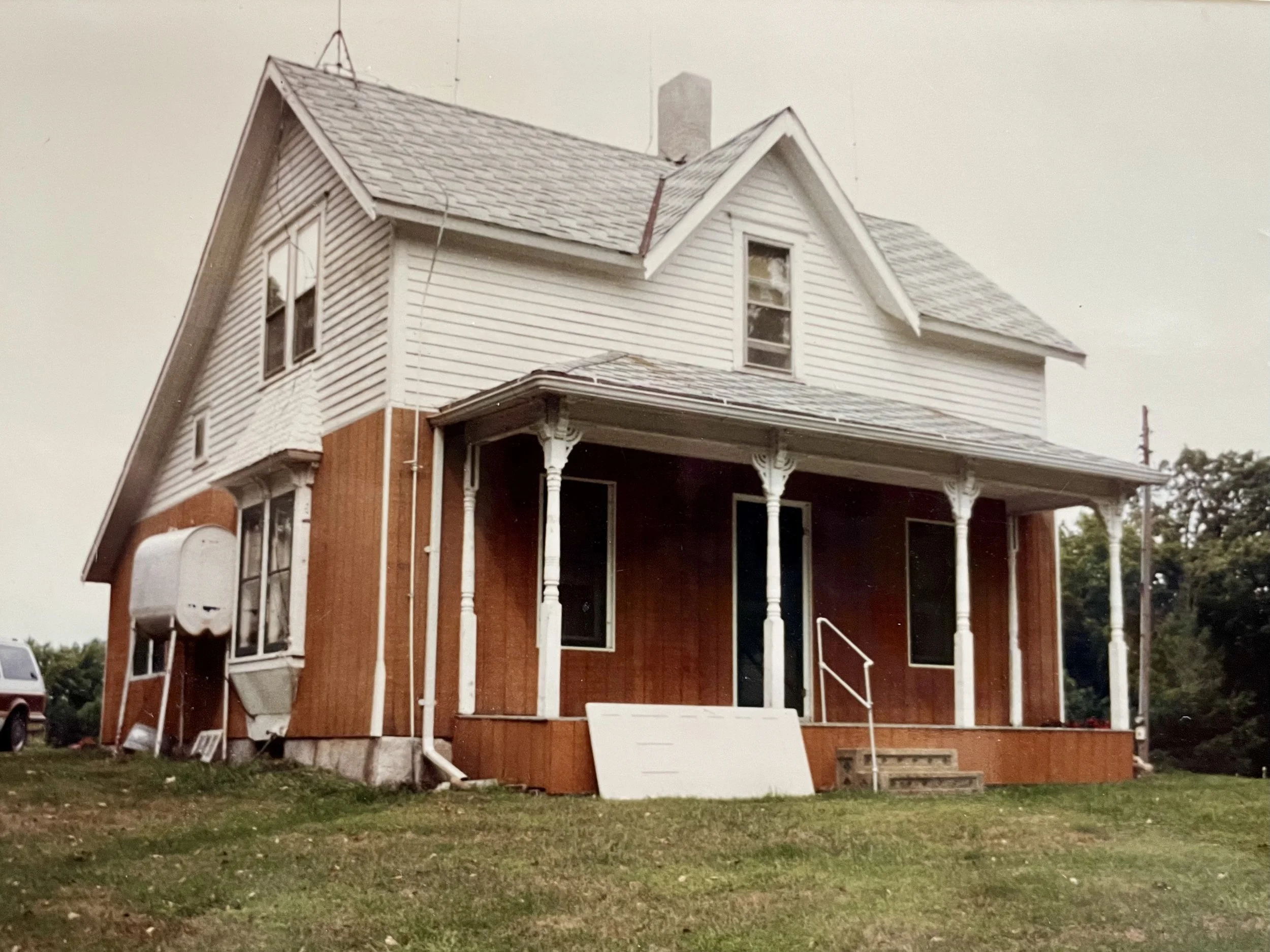
The Svercl farmhouse, Blooming Prairie, Steele County, Minnesota (copyright 1989 photo by Cathy Svercl)
My Grandmother’s Farmhouse
My grandmother’s farmhouse had been in my family for about 150 years. Several generations had lived there, and the house had evolved over time to accommodate the people who called it home.
The main floor had four rooms: a front porch, living room or parlor, dining room, and a large kitchen. The kitchen opened onto a back porch and vegetable garden. There was also a bedroom off the living room, traditionally used by the oldest person in the household.
The house originally had no indoor bathroom. Eventually, a bathroom was added in the basement, which otherwise was used for storage. Upstairs were two bedrooms and a large open area near the stairwell that was sometimes used as another bedroom.
That main-floor bedroom became especially important as my grandmother got older. We even added a toilet room on the main level for easy access.
With a bedroom, toilet, and the everyday living spaces all on the main floor, she could manage most of her daily life without needing to use the stairs to the second floor or go down to the basement bathroom.
That relatively simple arrangement and modification allowed her to remain in the farmhouse independently for several years.
Eventually, she fell and went to a nursing home in the nearby small town. She never returned to the farm.
But those years in the farmhouse mattered. She was surrounded by familiar things, her plants and garden, and the place that had been part of her family’s life for generations. She had the freedom to live independently for as long as she could.
Sometimes a few thoughtful changes can make an enormous difference.
When Staying Home Is No Longer the Best Choice
My great-aunt, whom I always called Auntie, had a professional career, never married or had children, and lived independently in her own home for 30 years.
As she got older, everyday tasks became increasingly difficult. Shopping, preparing meals, dealing with the paperwork that comes from medical expenses, and keeping up with everything else became burdensome. She decided she would rather spend her energy enjoying her garden and doing a little cleaning than trying to keep up with everything the house and daily life demanded.
Eventually, Auntie developed Alzheimer’s disease, and I had to make the decision to move her out of the home where she had lived for 30 years and into an Alzheimer’s care unit.
It was a big change. We moved her from a two-bedroom house on a lake into a single room. We took family photographs and a couple of pieces of familiar furniture to help make the new room feel recognizable and familiar.
And something unexpected happened. Her overall health improved.
She had three meals a day prepared for her. She no longer had to shop, cook, clean, or manage all the other responsibilities of running a household. Instead, she could spend her time reading, playing Scrabble games, or walking outside and enjoying the natural surroundings.
She had lost the independence of living alone in her own home, but she gained a different kind of independence: more time and energy to enjoy her days.
It was a reminder that aging in place isn’t always about staying in the same place. Sometimes a different living arrangement can provide a safer, happier, and more fulfilling life.
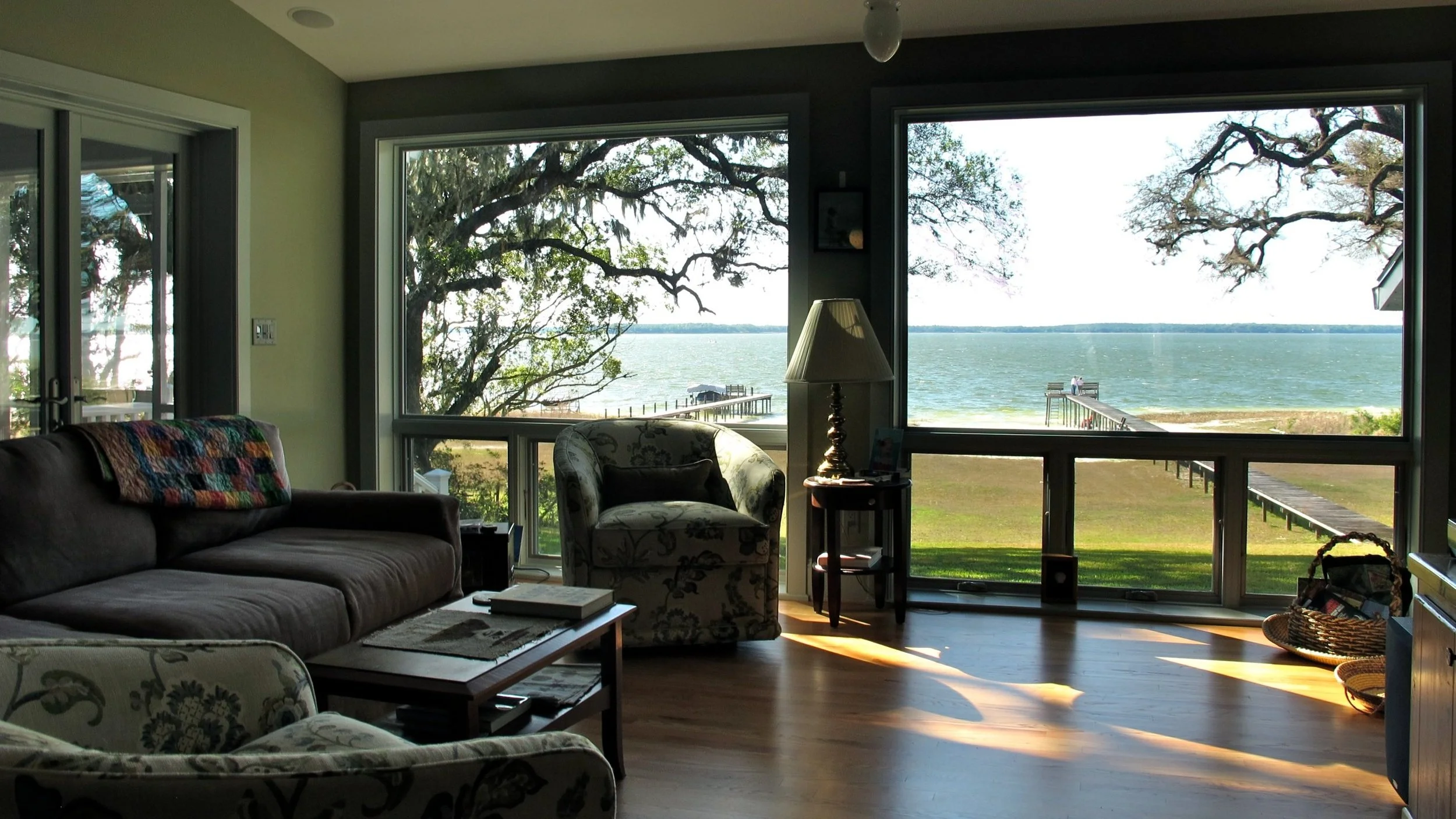
Project #09-09, Marion County, FL. Lake home remodeled after Clients downsized from the house where they had raised a family.
What If You Could Stay in Your Neighborhood?
There is another possibility that I think deserves more attention.
What if an older relative didn’t have to move into your house to be close to you? What if they could move into a small apartment, duplex, or townhouse in your neighborhood?
Or what if you were the one downsizing? Instead of hanging on to the house where you raised your family, what if you moved just a couple of blocks away into a smaller home?
You would still have your neighbors, your favorite shops and restaurants, and the familiar places you visit every day. Your family could be close by, but you would still have your own front door, kitchen, and living space.
Some older neighborhoods already offer examples of how this can work. You might find a duplex or a small apartment building tucked among single-family homes, or a few townhouses on a neighborhood street. These different housing types allow people with different household sizes, needs, and budgets to live in the same community.
Over time, many neighborhoods lost some of that variety as zoning and development patterns increasingly favored detached single-family homes. In some places, it became difficult or even impossible to build the smaller multifamily housing that had once been part of the neighborhood.
I think we need to bring some of that variety back.
Not everyone needs a large single-family house. Some people need a smaller home, an apartment, or a duplex. Others need a separate living space for a family member who wants to remain close but maintain some independence.
Having those options nearby can make a tremendous difference. It gives people the opportunity to change their housing as their lives change without necessarily having to leave the neighborhood they love.
You wouldn’t necessarily be aging in the same house, but you could be aging in the same community.
Have You Talked About What Comes Next?
Too often, families don’t talk about these things until something happens. A fall, a diagnosis, or the realization that everyday tasks have become too difficult can suddenly turn a long-term question into an urgent decision.
It may be worth starting the conversation earlier.
Think about your own family history. What happened to your grandparents as they got older? Did arthritis make everyday activities difficult? Did someone have diabetes or another condition that affected their independence? Did someone have to help them with shopping, cooking, cleaning, or managing paperwork? Did they eventually have to leave their home unexpectedly?
And just as important: What would you want for yourself?
If we’re lucky, we’ll all get older. Our needs and priorities will change, just as they have for the generations before us.
Aging in place doesn’t have to mean holding on to the same house at all costs. It means thinking about what will allow you to live well, maintain your independence, and stay connected to the people and places that matter to you.
That might mean modifying the house you’re in. It might mean moving to a smaller home nearby. Or it might mean choosing a different living arrangement altogether.
The important thing is having choices—and making those choices while you still have them.
Next in the series: Making Room Without Giving Up Independence.
Sometimes the answer is to adapt the home rather than move. In Part 3, we'll explore some of the ways thoughtful design can make room for an aging parent, an adult child, or other family members while allowing everyone to maintain some privacy and independence.
Explore the Forever Homes & Neighborhoods Series
Aging in Place Doesn’t Always Mean Staying in the Same House
Making Room Without Giving Up Independence (not published yet!)
What If Your Neighborhood Could Grow With You? (not published yet!)