

This article is the first part of a four-part series about how our homes and neighborhoods can adapt as our families and lives change. We’ll look at making room for family, aging in place, creating more flexible living spaces, and finding housing choices that allow us to stay connected to the communities we love.
Making room for the people we love—and the lives we’re living now.
When we think about our homes, we often think about the people who live there today. How many bedrooms do we need? Do we have enough room for everyone? Is the kitchen big enough? Do we need a home office, a playroom, or a guest room?
But families don’t stay the same. Children grow up and leave home. Parents get older. Grandparents need a little more help. Adult children sometimes return home. Families grow, shrink, spread out, and come together again.
And our homes don’t always keep up.
I’ve been thinking about how much the meaning of home changes over the generations, and how the houses we live in become part of those family stories.
Making room for a growing family
When I was growing up, my parents had three bedrooms for a family with four children. There wasn’t a separate bedroom for everyone, and eventually my parents decided they needed more space.
My parents had very different experiences growing up. My father was raised in a farmhouse where three generations of family lived together. In previous generations, there had been at least ten children living in that house. Sharing bedrooms—and even beds—was simply part of life. My mother, on the other hand, shared a bedroom with her brother until she was a teenager. She remembered wanting a room of her own and wanted something different for her children.
Their solution wasn’t to move. My father built large, floor-to-ceiling bookcases to divide the family room into two additional bedrooms. Just like that, our three-bedroom house became a five-bedroom house.
It wasn’t a conventional renovation, but it worked for our family. My mother also let us choose new wall colors every few years. I remember having yellow walls and then lavender. My sister had pink, and later, as a teenager, white walls with red and black trim.
Our home changed as we grew up. The rooms weren’t necessarily designed for one permanent purpose. They were adapted to the people who lived in them.
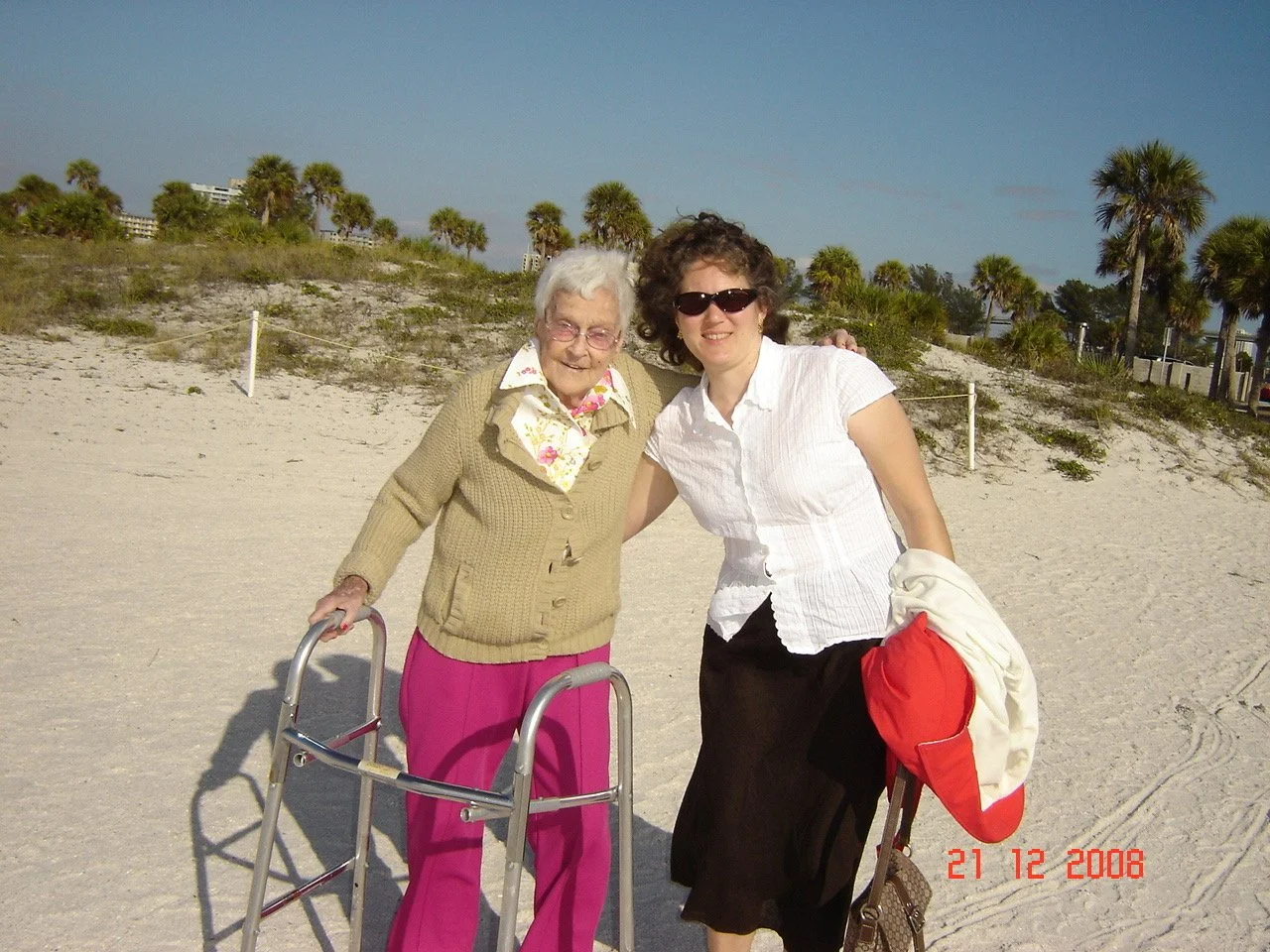
Auntie and Cathy, Clearwater Beach.
Making room for generations
When I was a little girl, my grandparents came over almost every day. They would have lunch with us and sometimes stay for dinner before going home. Having grandparents around wasn’t an occasional holiday event. It was simply part of our family life.
Today, my siblings live in different places, and our families don’t gather every day. Sometimes we manage to get everyone together for a holiday or a special occasion. After travel became possible again following COVID, we were able to get my parents, siblings, and their children together for a family photograph.
The family has grown, but it has also spread out.
The younger generation is now leaving for college and starting lives of their own. They may not live at home anymore, but there will always be room for them to come back for the holidays. That might mean guest bedrooms, sleeping on temporary mattresses, or figuring out who gets which room. We’ve all made it work.
Because a home doesn’t necessarily have to accommodate everyone all the time. Sometimes it just needs to be flexible enough to bring everyone together when it matters.
A house has a life of its own
I’ve also seen how a home can change as the people living in it get older.
My grandparents eventually chose to leave their house and move into an apartment. As they aged, they needed more help with meals, repairs, and the kind of deep cleaning that becomes harder to manage. Moving to a smaller place was a choice they made while they were still able to make it for themselves.
My grandmother on the farm had a different experience. Her farmhouse had been home to our family for 150 years. Several generations had lived there, and rooms were used in different ways depending on who was in the household. The oldest person in the family had a bedroom on the main floor, and that arrangement eventually allowed my grandmother to remain in her familiar home for many more years.
And then there was my great-aunt, whom I called Auntie. She had built a professional career and had never married or had children. She had lived independently in her own home for 30 years. Eventually, that house was no longer the best place for her. Helping her move was difficult, but it also gave her a better quality of life.
Each of these experiences taught me something different. There isn’t one right answer for every family, and there isn’t one right kind of home for every stage of life.
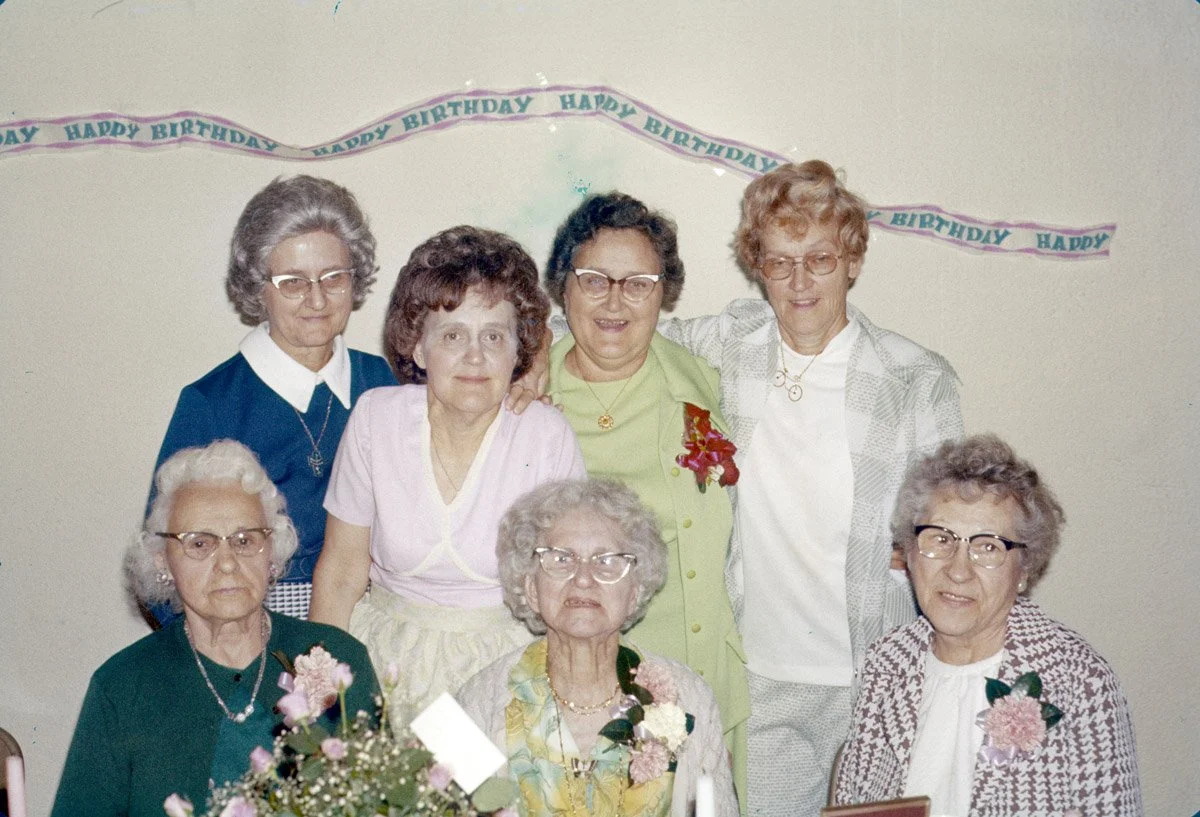
2 generations of women. Auntie is top right.
What does your home need to do next?
We spend a lot of time choosing a home based on the life we expect to live when we move in. We think about the number of bedrooms, the size of the kitchen, where the children will play, and whether we’ll have enough room for guests.
But what happens ten or twenty years later?
Will the house still work when the children have moved out? What if one of them comes back? What if an older parent needs to live nearby—or with you? What if you want to downsize but don’t want to leave the neighborhood you’ve called home for decades?
These aren’t necessarily problems. They’re simply changes in life, and our homes can sometimes be adapted to accommodate them.
As an architect, I think about how spaces work, how rooms can be reconfigured, and how a home can serve people in different ways over time. But before we talk about additions, renovations, or new housing options, I think there’s a more important question:
Have we talked with our families about what the next chapter might look like?
In the next part of this series, I want to explore what it really means to age in place. Because staying in your home as you get older doesn’t always mean staying in the same house—and sometimes the most important thing about home isn’t the building at all.
Next in the series: Aging in Place Doesn't Always Mean Staying in the Same House.
We've looked at how families change and how our homes sometimes need to change with them. But what happens when the house itself is no longer the best place to live? In Part 2, we'll look at what aging in place really means—and why it doesn't always mean staying in the same house.
Explore the Forever Homes & Neighborhoods Series
Families Change. Does Your Home?
Aging in Place Doesn’t Always Mean Staying in the Same House
Making Room Without Giving Up Independence
What If Your Neighborhood Could Grow With You?