

Hot-Humid Climate Design: Why Florida Homes Should Be Designed for Their Climate
Imagine building a ski lodge in the Arizona desert. It would seem absurd. Yet every day in Florida, homes are designed as though climate were little more than an afterthought.
For decades, many homes have been adapted from plans developed for other parts of the country rather than designed specifically for Florida’s unique environment. The result is often predictable: rooms that overheat in the afternoon, outdoor spaces that sit empty for much of the year, high energy bills, and houses that constantly battle moisture and humidity.
A truly successful Florida home begins with its climate.
Good architecture doesn’t fight nature—it works with it.
Florida’s hot-humid climate presents challenges unlike almost anywhere else in the United States. We experience intense sunshine, high humidity, heavy seasonal rains, hurricanes, salt air near the coast, and months of warm weather that encourage outdoor living. These conditions should shape every design decision, from the orientation of the home to the depth of the porch roof.
Ironically, many of these lessons aren’t new. Florida’s historic homes and the vernacular architecture of the Southeast evolved over generations to respond naturally to the climate. Deep porches shaded walls from the afternoon sun. Tall ceilings allowed hot air to rise. Windows were positioned to capture breezes long before air conditioning existed. Outdoor rooms became extensions of everyday living.
Today’s homes can apply those same principles while incorporating modern construction methods, energy-efficient systems, and contemporary design.
Designing for Florida means paying attention to several key principles:
Orienting the home to reduce unwanted solar heat.
Providing generous roof overhangs and shaded outdoor living spaces.
Using windows thoughtfully to capture daylight while minimizing heat gain.
Designing for natural ventilation whenever possible.
Building a well-insulated, tightly sealed building envelope that controls both heat and moisture.
Selecting durable, low-maintenance materials that withstand Florida’s sun, rain, humidity, and coastal conditions.
Creating resilient homes that better withstand hurricanes and flooding.
Connecting indoor and outdoor spaces so families can enjoy Florida’s climate instead of hiding from it.
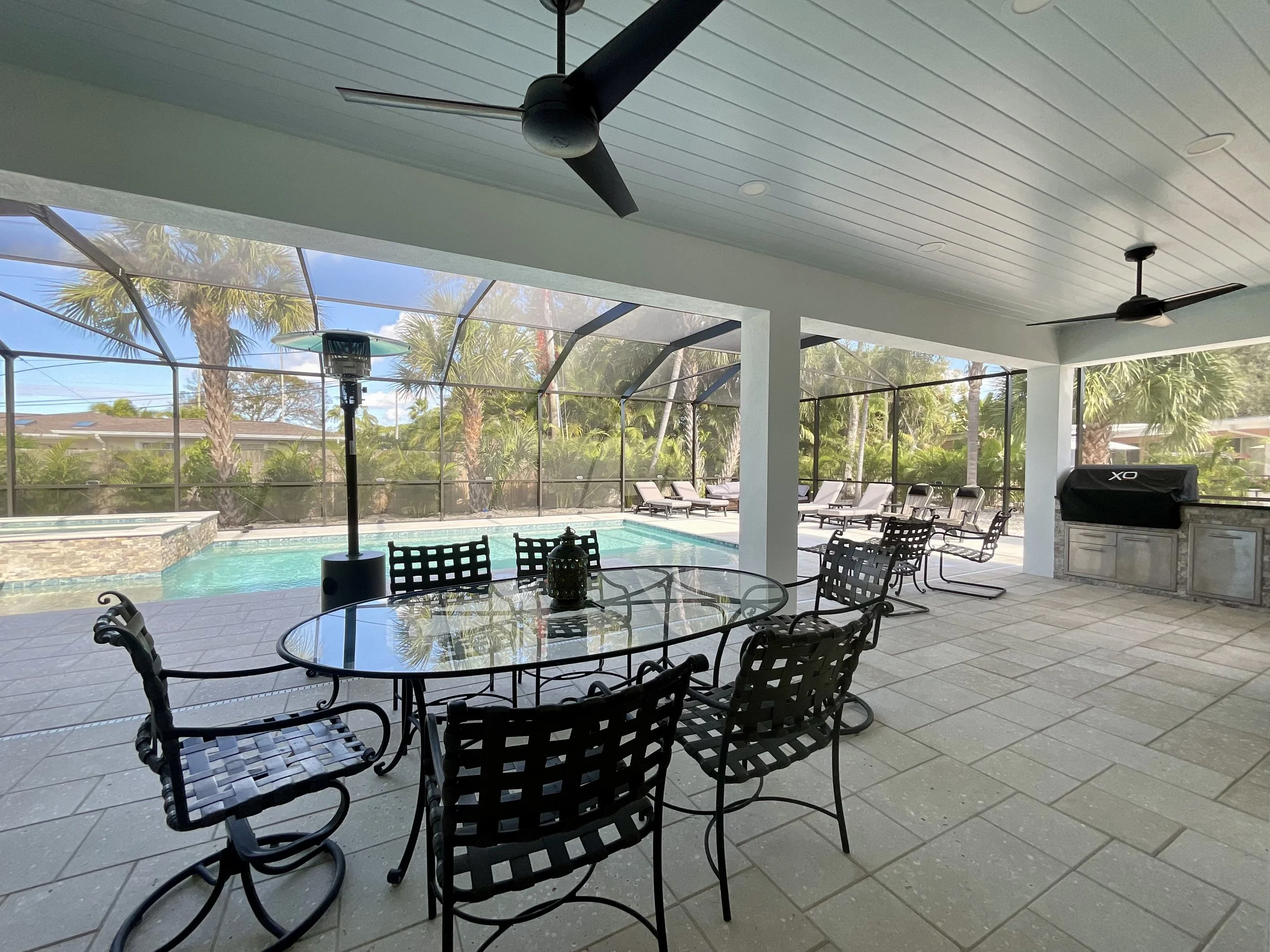
Lanai overlooking the pool area with ceiling fans and deep enough for outdoor living spaces. Project #24-01, Belleair, FL.
Learning From the Past: Florida Homes and Insulation
The importance of designing for climate is especially clear when looking back at homes built in Florida during the 1950s and 1960s.
Many homes from that era were constructed with little or no insulation. At the time, insulation was often viewed primarily as a way to keep homes warm in colder northern climates. Since Florida rarely experienced freezing temperatures, it was commonly assumed that insulation was not necessary.
We now understand that insulation is just as important in a hot climate as it is in a cold one. In Florida, insulation slows the transfer of heat into the home, helping maintain more comfortable indoor temperatures, reducing energy costs, and improving overall efficiency. Combined with proper air sealing, it also helps control moisture and humidity—two of the biggest challenges in a hot-humid environment.
This is an important lesson: designing for climate isn’t simply about protecting a home from cold winters or hot summers. It is about understanding how heat, humidity, sunlight, rain, and airflow affect a home every day of the year.
These principles aren’t tied to a particular architectural style. Whether your home is Mid-Century Modern, Craftsman, Mediterranean, Coastal, Contemporary, or Modern, good climate-responsive design makes every style perform better. Even homeowners who prefer architectural styles from other parts of the country can benefit from adapting those designs to Florida’s hot-humid climate rather than simply copying them.
As an architect, I’ve found that homeowners rarely regret investing in these fundamentals. They may not notice them every day, but they appreciate the results: lower utility bills, greater comfort, reduced maintenance, and outdoor spaces that become favorite gathering places throughout much of the year.
In many ways, climate is the client you can’t ignore. Every home in Florida will experience the same sun, humidity, storms, and changing seasons. The question isn’t whether those forces will affect your home—it’s whether your home was designed with them in mind.
In future articles, I’ll explore each of these principles in greater detail, including solar orientation, shading, insulation, windows, natural ventilation, hurricane resilience, and designing outdoor living spaces that truly work in Florida’s hot-humid climate.
Because when your home is designed for its climate, it doesn’t just look beautiful—it feels right every day you live there.
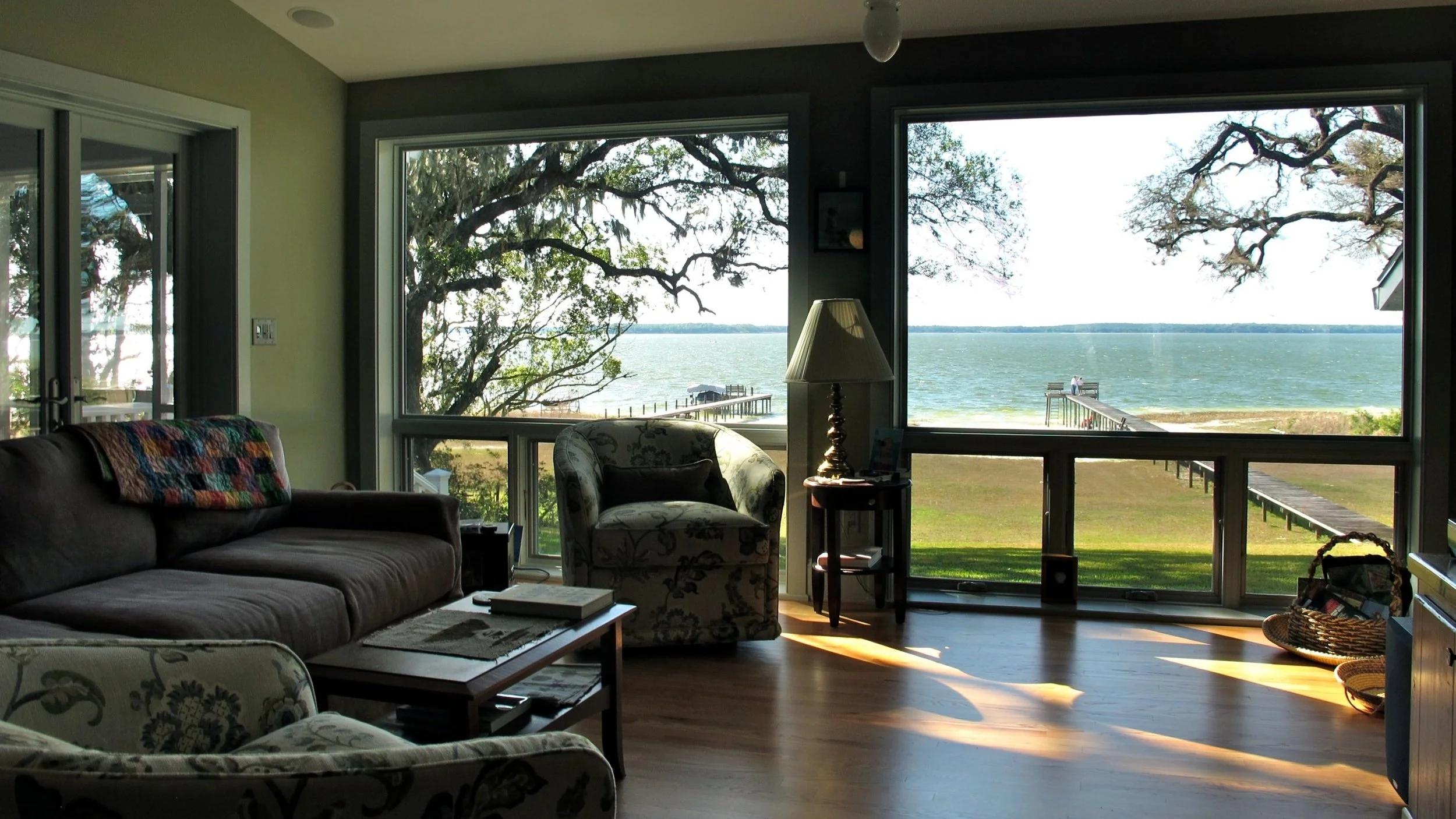
Treating the interior like a large porch. Project #09-09, Marion County, FL.
Next Steps: Designing Your Forever Home
Designing a home for Florida begins with understanding Florida. Climate, site, materials, and lifestyle all work together to create a home that is comfortable, resilient, and enjoyable for years to come.
If you are planning a new home, addition, or major renovation, start by thinking beyond square footage and style. Consider how your home will respond to the sun, heat, humidity, storms, and the way you want to live.
Download my Project Planning Pack to help you organize your goals, priorities, and questions before beginning your project.
Or schedule a consultation to discuss how climate-responsive design can help create your Forever Home.